





How quickly does a QualityGrader pay for itself?
How quickly does a QualityGrader pay for itself?
How quickly does a QualityGrader pay for itself?
How quickly does a QualityGrader pay for itself?
The payback period for a QualityGrader varies from one business to another. An optical sorting machine for potatoes and onions pays for itself not only through labour savings, but also through more consistent throughput, fewer unnecessary rejects and greater control over the sorting process. Labour costs, sorting capacity, batch quality and customer requirements differ from one business to another. For this reason, there is no standard payback period. However, in practice, we consistently see the same factors at play.
Labour savings are often the first reason to invest
It is becoming increasingly difficult to find suitable staff for manual quality control. The work requires a great deal of concentration, labour costs are rising, and scheduling becomes vulnerable when there are not enough staff available. For many companies, labour savings are therefore the primary reason for investing in a QualityGrader. That motivation remains valid, but the value of optical sorting goes beyond simply reducing the number of people on the production line.
Why does processing capacity remain more consistent?
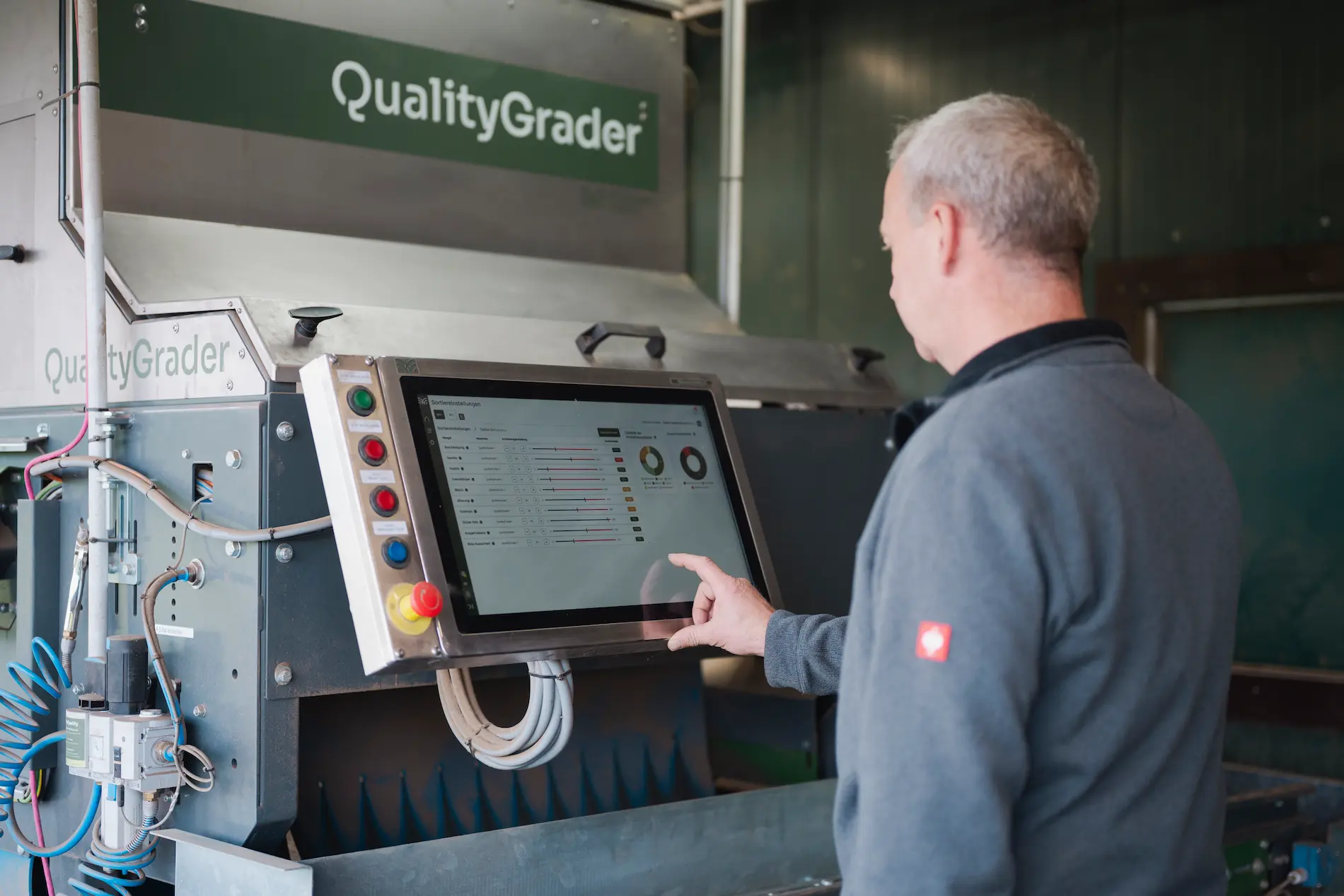
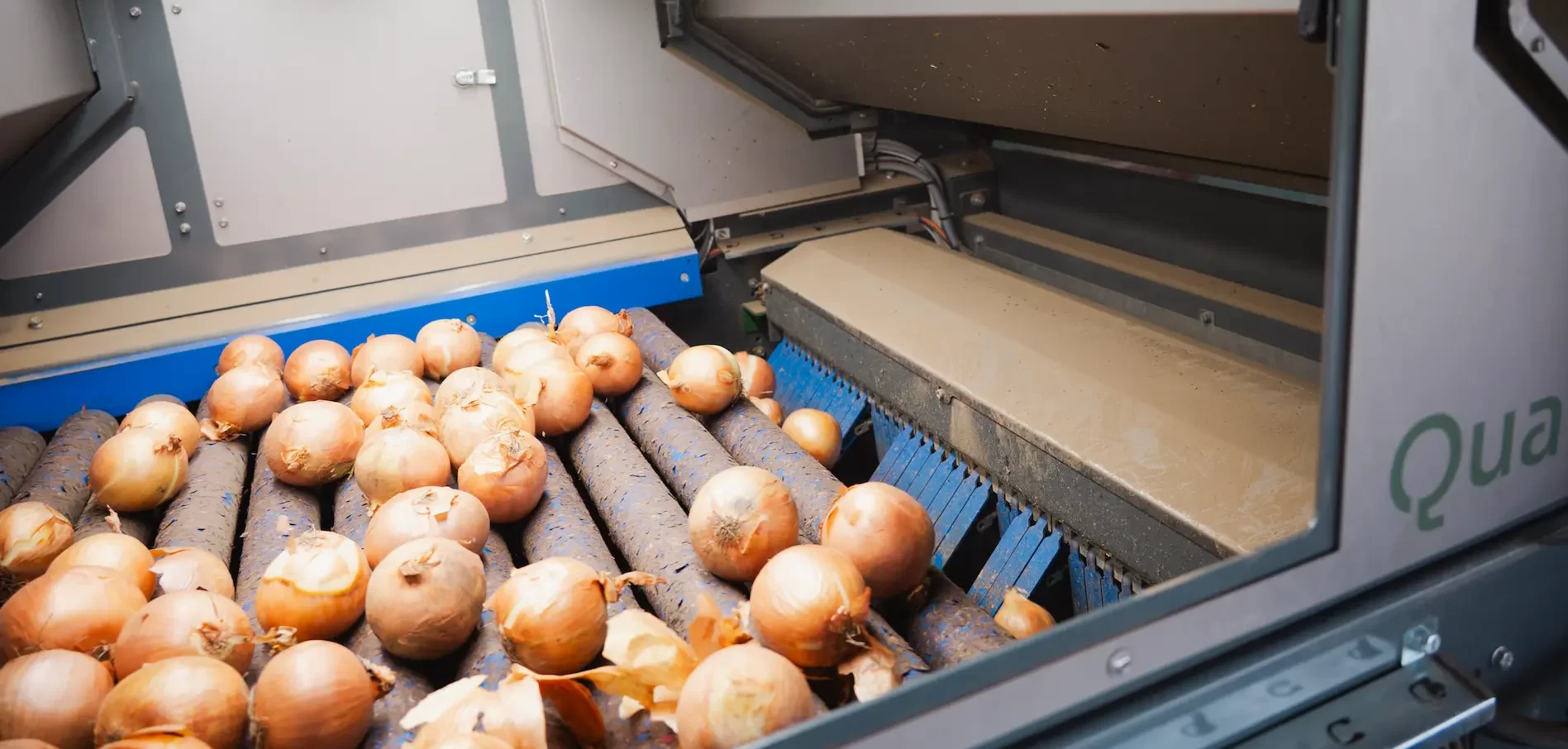
Anyone who sorts potatoes or onions knows the difference between an easy batch and a difficult one. With a batch containing many defects, manual inspection requires more attention. Throughput decreases and it becomes more difficult to maintain the desired quality. The QualityGrader assesses every potato or onion individually using industrial cameras and AI algorithms. Each product is assessed according to the same pre-set criteria, regardless of the time of day or the number of defects in the batch. Rejected products are automatically removed using high-speed rejction fingers. As a result, a difficult batch has virtually no impact on processing capacity, unlike with manual quality control. We have seen with various customers that, following investment in a QualityGrader, this leads to a 10 to 20 per cent increase in processing capacity. This more stable and higher capacity can deliver significant value, particularly during peak periods. A batch that proves more difficult than expected no longer causes delays in the rest of the schedule. Customers regularly indicate that they initially purchased the QualityGrader to save on labour, but subsequently see the predictability and control over the process as the main added value. Labour savings are often the reason to invest, but process stability is what truly determines the payback period.
How does the QualityGrader minimise unnecessary reject?
The benefits of a QualityGrader lie not only in labour savings and stable capacity, but also in making better use of every batch. If sorting is too strict, good product ends up in the rejects unnecessarily. If sorting is less strict, more defective product may be delivered to customers. That is why, with the QualityGrader, there is a strong focus right from the start on retaining good product. Every marketable product that is rejected unnecessarily directly reduces your return. To make a fair comparison, it is important to measure both the QualityGrader and the manual inspection process. The results are often surprising. Even experienced staff unconsciously sort out good products, particularly with relatively good batches where there is a tendency to keep making corrections. In many situations, the QualityGrader provides a more consistent assessment, and fewer good products are wrongly rejected. This difference is immediately reflected in the quantity of saleable product and, consequently, in the payback period.
“Customers often say that they initially bought the QualityGrader to save labour, but in hindsight they see the predictability and control over the process as its main added value.”
What is the value of better batch insights?
Data is becoming an increasingly important management tool in the potato and onion supply chain. Greater insight into the quality of batches helps to better determine which batch is suitable for which destination. With the VisionCore update at the end of July 2026 – the latest software update for the QualityGrader – the first steps are being taken towards gaining greater insight into batch data and the sorting process. The possibilities are still very much under development. Nevertheless, this information can already help to compare batches more effectively and make more informed decisions about which batch is processed when. Better planning, fewer surprises and smarter utilisation of batches represent value, even if this cannot be directly expressed as a single figure.
How do you determine the payback period?
The payback period for a QualityGrader is not determined by any single benefit. For one company, the greatest benefit may lie in labour savings; for another, in more stable capacity, fewer unnecessary rejections or a more consistent sorting result. Often, it is precisely the combination of these factors that makes the investment worthwhile. You can make an initial assessment yourself by taking a critical look at your current sorting process. How much do you spend annually on labour costs for manual quality control? How often do you have to adjust your planning because a batch proves more difficult than expected? How much good product currently ends up in the rejects unnecessarily? And to what extent does the capacity of your sorting line still depend on manual inspection? It is precisely this last question that is of interest. What would it mean if quality control no longer determined the capacity of the entire sorting line? How many tonnes more could you process each week? The result might surprise you. The value of optical sorting therefore lies not in a single calculation, but in the combined benefits of reduced labour, more stable capacity, more saleable product and greater control over the process.
Would you like to know what the payback period could be for your operation? If so, please get in touch with us. We’d be happy to work with you to calculate the potential benefits of a QualityGrader solution in your situation and to assess a realistic payback period.